18 December 2025
The Kuari Pass Trek is one of the most popular trekking routes in Uttarakhand, famous for its panoramic Himalayan views, dense forests, and vast green meadows. Whether you are a beginner, an adventure seeker, or a photographer, choosing the best time to visit Kuari Pass trek can make a huge difference in your experience.
Timing affects not just the weather and trail conditions, but also the scenery, snowfall, and safety. For example, winter offers snowy landscapes and thrilling trekking, while spring brings blooming rhododendrons and moderate temperatures. Summer provides lush green meadows and clear skies, and autumn guarantees post-monsoon freshness and stunning panoramic views.
Many trekkers make the mistake of visiting during the monsoon or off-season, which can lead to slippery trails and limited visibility. By planning your trek according to the right season, you can enjoy safety, adventure, and the beauty of the Himalayas to the fullest.
For detailed trek packages and itinerary, check our Kuari Pass Trek page and plan your adventure with experienced guides.
Quick Seasonal Overview of Kuari Pass Trek
The Kuari Pass trek offers a unique experience in every season. To help you decide the best time to visit, here’s a quick overview of what each season offers:
Kuari Pass Trek in Winter (December – February) – Best Time for Snow
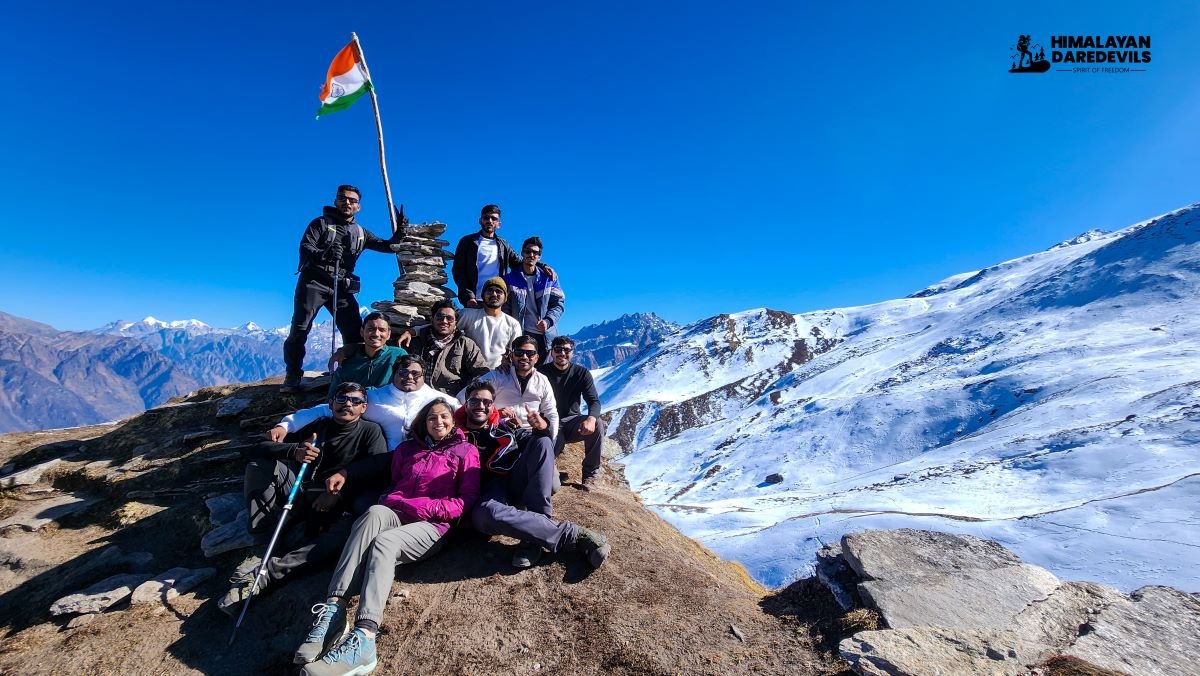
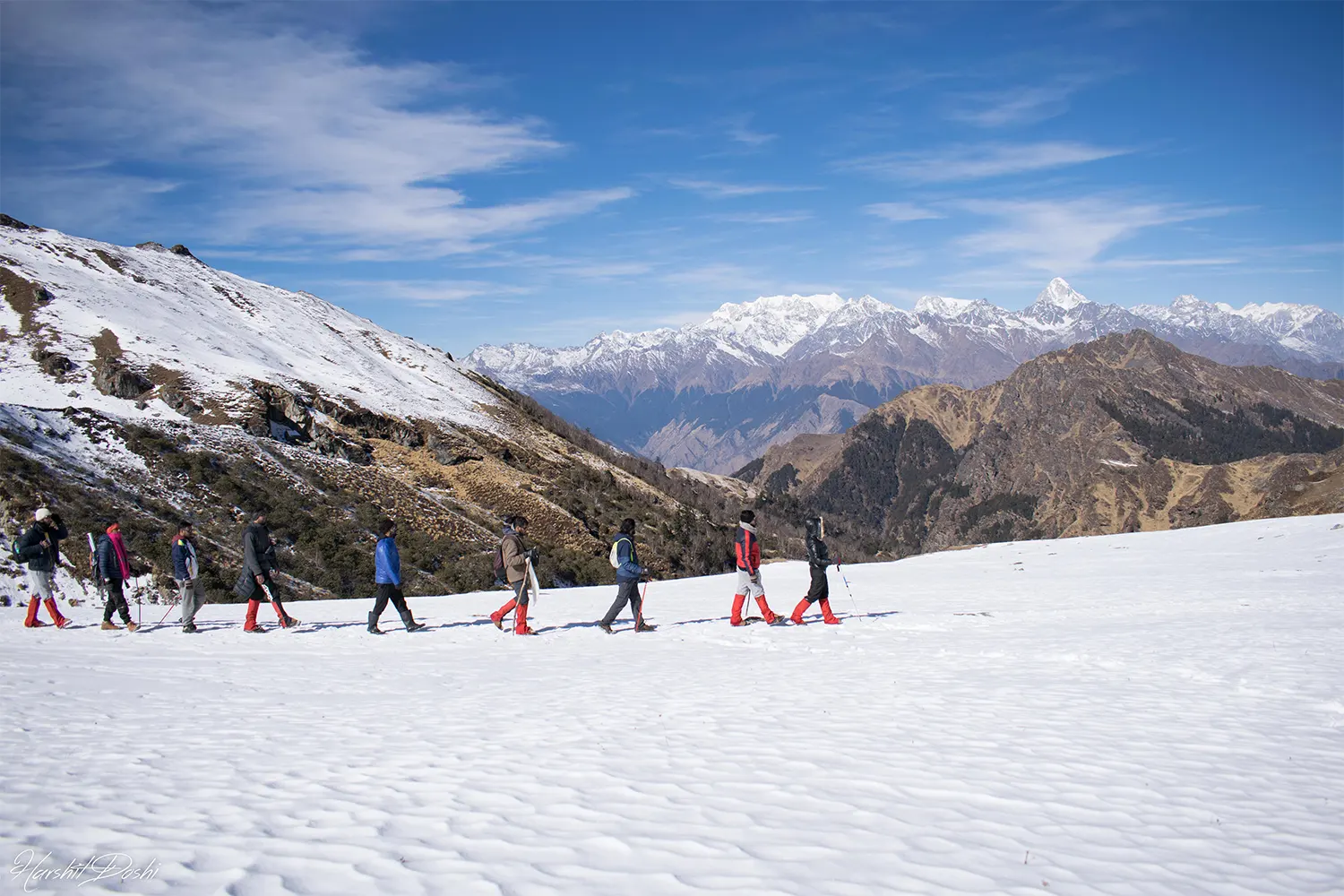
For adventure seekers and snow lovers, winter (December to February) is the best time to visit Kuari Pass trek. During this period, the region is blanketed in snow, transforming the Himalayan meadows into a breathtaking white landscape. Winter trekking at Kuari Pass is perfect for experienced trekkers, photographers, and those looking for a thrilling snowy adventure.
Weather and Temperature
Day temperature: 0°C to 5°C
Night temperature: -5°C to -10°C
Snowfall is frequent, and the trails are often covered in thick snow
Trekking Experience
Winter treks offer a unique challenge and stunning scenery:
Snow-covered trails and frozen streams
Clear views of Himalayan peaks like Nanda Devi, Chaukhamba, and Hathi Parvat
Camping on snow meadows under a starry sky
Who Should Attempt the Winter Trek
Experienced first-time trekkers with proper guidance
Adventure enthusiasts who enjoy snow trekking and winter camping
Photographers seeking pristine snow landscapes
Challenges to Keep in Mind
Slippery trails due to ice and snow
Extremely cold nights require thermal wear and proper sleeping bags
Frozen water sources; carry enough water and supplies
Always trek with a traine guide or organized trekking company for safety
Kuari Pass Trek in Spring (March – April) – Best Time for Beginners and Families
For those who are trekking for the first time or prefer moderate weather, spring (March to April) is the best time to visit Kuari Pass trek. During this season, the snow begins to melt, and the meadows transform into lush green landscapes with blooming rhododendrons, making it ideal for beginners, families, and nature lovers.
Weather and Temperature
Day temperature: 5°C to 15°C
Night temperature: -2°C to 5°C
Pleasant, mild weather ensures comfortable trekking
Trekking Experience
Spring treks are safer and more enjoyable:
Trails are less slippery compared to winter
Blooming rhododendron forests along the trail add vibrant colors
Wide alpine meadows (bugyals) offer perfect camping spots
Clear views of Himalayan peaks like Nanda Devi and Chaukhamba
Why Spring is Ideal
Suitable for beginners and first-time trekkers
Family-friendly trekking experience with moderate difficulty
Opportunities for photography and nature exploration
If you are still deciding which trek to choose, you can check our detailed comparison guide: Pangarchulla Peak Trek vs Kuari Pass Trek, which highlights difficulty, scenery, and trekking experience.
Kuari Pass Trek in Summer (May – June) – Best Time for Meadows & Views
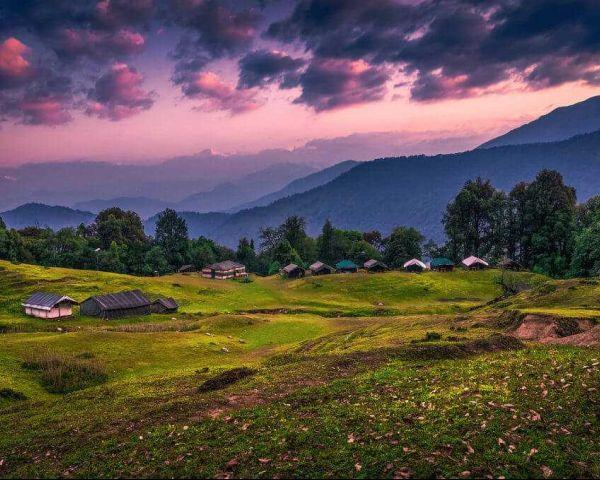
May to June is one of the best times to visit Kuari Pass trek if you want to experience lush green meadows, clear skies, and pleasant weather. By this time, the snow has melted completely, revealing wide grassy meadows and forests filled with wildflowers. Summer trekking is ideal for nature lovers, photographers, and families seeking a comfortable trekking experience.
Weather and Temperature
Day temperature: 15°C to 18°C
Night temperature: 6°C to 10°C
Mild and comfortable weather perfect for trekking
Trekking Experience
Summer treks at Kuari Pass offer:
Wide green meadows ideal for camping and photography
Clear views of Himalayan peaks like Nanda Devi, Hathi Parvat, and Chaukhamba
Flowing streams and safe trails make trekking enjoyable for beginners and families
Why Summer is Ideal
Perfect for family treks and first-time trekkers
Trails are dry, safe, and easy to navigate
Scenic views and pleasant daytime weather make it great for photography and sightseeing
Kuari Pass Trek in Monsoon (July – August) – Why You Should Avoid
The monsoon season (July to August) is not recommended for the Kuari Pass trek. Heavy rains make the trails slippery and risky, while leeches and waterlogged paths can make trekking uncomfortable and unsafe.
Weather and Challenges
Continuous rainfall and muddy trails
Streams may overflow, making some sections dangerous
Reduced visibility due to fog and clouds
Trekking Experience
While the region remains green and scenic during monsoon, trekking during this time is challenging and risky:
Difficult to camp on wet meadows
Risk of accidents or injuries increases
Most trekking companies pause operations during monsoon
Safety Advice
Avoid trekking in July and August unless you are very experienced and fully prepared
Always check weather forecasts before planning a monsoon trek
Kuari Pass Trek in Autumn (September – November) – Best Time for Clear Views
Autumn (September to November) is one of the best times to visit the Kuari Pass trek for trekkers seeking clear skies, crisp air, and panoramic Himalayan views. Post-monsoon freshness ensures the forests, meadows, and trails are safe and scenic, making it ideal for photographers, solo trekkers, and families.
Weather and Temperature
Day temperature: 10°C to 14°C
Night temperature: 2°C to 6°C
Clear skies with minimal rainfall and low humidity
Trekking Experience
Autumn treks offer:
Golden-green alpine meadows and vibrant forests
Panoramic views of peaks like Nanda Devi, Chaukhamba, and Hathi Parvat
Dry and safe trails suitable for all levels of trekkers
Pleasant camping conditions with cool nights
Why Autumn is Perfect
Ideal for photography and scenic trekking
Peaceful trails with fewer crowds
Comfortable temperatures for family treks and solo travelers
For those looking to understand why Kuari Pass Trek is a must-do, read our detailed blog: Why Kuari Pass Trek Should Be on Every Trekker’s Bucket List.
Month-Wise Kuari Pass Trek Weather Breakdown
Best Time for Different Types of Trekkers
Choosing the best time for the Kuari Pass trek depends on your experience, interests, and trekking goals. Here’s a quick guide:
1. Snow Lovers
Best Months: December – February
Ideal for snow trekking, winter camping, and stunning snow-covered landscapes
Requires proper winter gear and guidance
2. Beginners & First-Time Trekkers
Best Months: March – May
Mild temperatures and safe trails
Blooming rhododendrons and green meadows make trekking enjoyable
3. Family Trekkers
Best Months: April – June
Comfortable weather for camping and trekking with children
Easy-to-navigate trails suitable for all ages
4. Photographers & Nature Enthusiasts
Best Months: September – November
Clear skies, vibrant meadows, and panoramic Himalayan views
Perfect for capturing golden grasslands and post-monsoon freshness
5. Budget & Off-Peak Trekkers
Best Months: March & September
Fewer crowds and affordable trekking packages
FAQ – Kuari Pass Trek Best Time & Related Queries
Q1. What is the best month to visit the Kuari Pass trek?
The best months are March to June for beginners and families, December to February for snow lovers, and September to November for clear skies and photography.
Q2. Does it snow at Kuari Pass in winter?
Yes, Kuari Pass experiences heavy snowfall from December to February, creating a stunning white landscape perfect for snow trekking.
Q3. Is Kuari Pass trek safe for beginners?
Yes! The trek is moderate in difficulty during spring and summer (March to June), making it suitable for first-time trekkers and families.
Q4. Can families do the Kuari Pass trek?
Absolutely! The spring and summer months offer mild temperatures, safe trails, and beautiful meadows, making it family-friendly.
Q5. Is trekking safe during monsoon?
No, July and August are not recommended due to heavy rainfall, slippery trails, and landslide risks. Most trekking companies avoid this season.
Q6. What is the temperature at Kuari Pass in winter?
During winter, daytime temperatures range from 0°C to 5°C, while nights can drop to -5°C to -10°C, so proper winter gear is essential.